
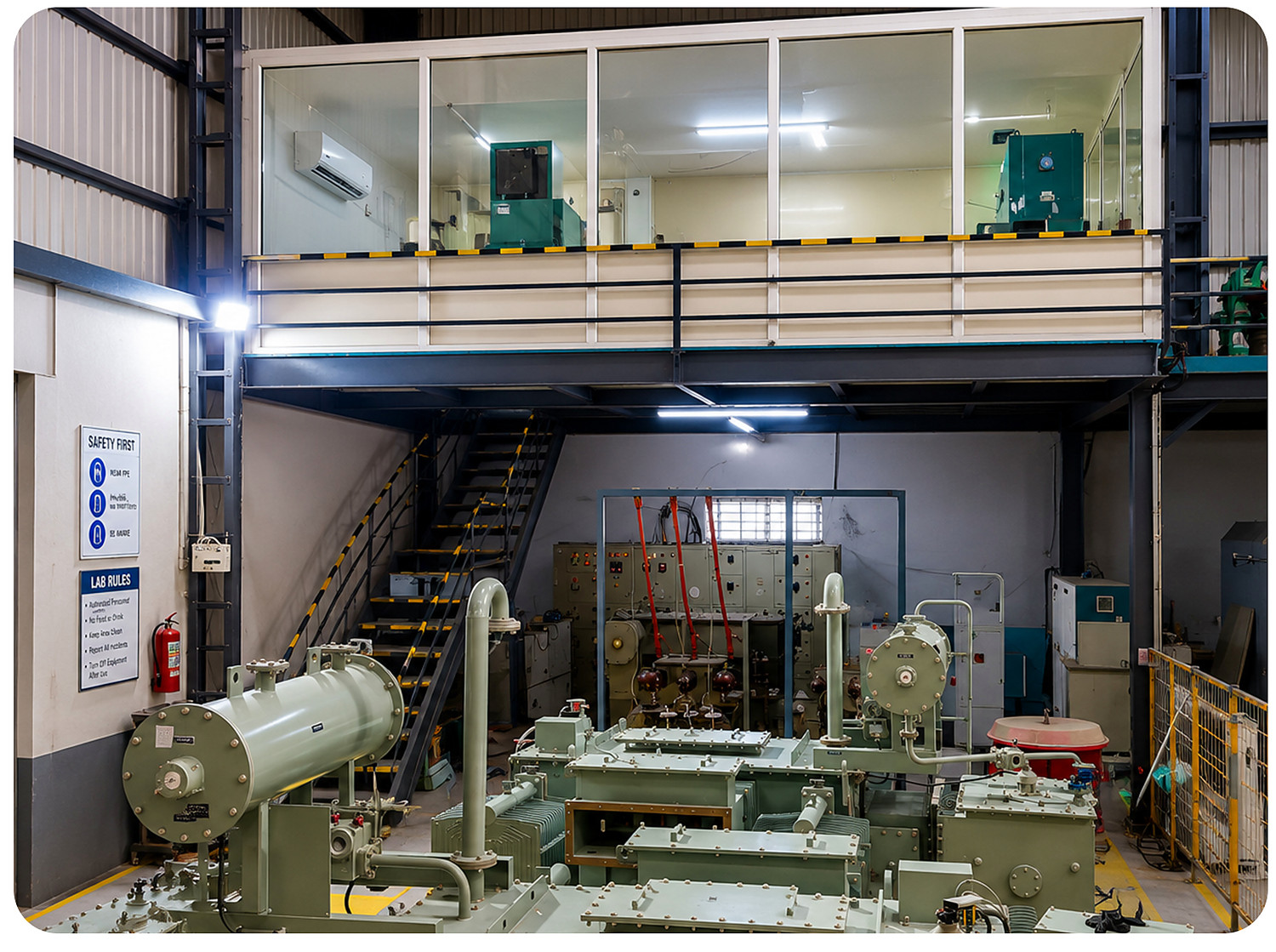
A distribution transformer is one of the few pieces of plant that will run for twenty-five years with almost no attention — right up until the day it does not. Nearly every failure we are called to could have been caught earlier by someone spending ten minutes a month with a torch.
This is the schedule we give to our own clients. It assumes an oil cooled unit; the dry type notes are at the end.
Monthly, by the site electrician
- Oil level in the conservator — against the marked minimum, not by eye
- Silica gel breather colour — blue is dry, pink means saturated and needs replacing
- Oil temperature and winding temperature indicator readings, logged
- Any oil seepage at the gaskets, radiator joints or the drain valve
- Bushing surfaces clean and free of cracks or tracking
- Cooling fans, where fitted, running and clear of debris
- Earth connections tight and visibly intact
Log the readings. A single temperature is not information; a rising trend over six months is.
Half-yearly
- Oil dielectric strength (BDV) test — a falling value means moisture ingress
- Insulation resistance between windings and to earth
- Tighten all HT and LT terminal connections to the specified torque
- Check the Buchholz relay for gas accumulation and operate the alarm circuit
- Verify the oil temperature indicator and winding temperature indicator alarm settings
Annually
- Full oil sample analysis — BDV, moisture content, acidity
- Winding resistance measurement, compared against the commissioning values
- Thermal imaging of the terminations under load
- Tap changer operation through its full range
- Repaint any surface where the finish has broken down
What the numbers should look like
| Test | Healthy | Investigate | Act now |
|---|---|---|---|
| Oil BDV (kV) | Above 50 | 40 – 50 | Below 40 |
| Insulation resistance | Above 1000 MΩ | 100 – 1000 MΩ | Below 100 MΩ |
| Winding resistance drift | Within 2% of commissioning | 2 – 5% | Above 5% |
| Top oil temperature rise | Below 50 K | 50 – 55 K | Above 55 K |
These are indicative for a standard distribution unit. Your test certificate carries the values measured on your transformer at works, and those are the ones to compare against.
Dry type transformers
There is no oil, so no BDV, no breather and no conservator. What replaces them is cleanliness and airflow. Cast resin windings collect dust, and dust holds moisture, which is how a dry type unit fails.
- Quarterly: visual inspection for dust, and clear the ventilation path
- Half-yearly: insulation resistance, and check that the cooling fans run
- Annually: dry compressed air clean of the windings and the core, with the unit isolated
- Annually: thermal imaging and a check for any surface tracking on the resin
Keep the commissioning test certificate with the maintenance log. Every reading you take is only meaningful against the day the unit left the works.
When to call the manufacturer
Gas in the Buchholz relay, a sudden temperature rise at unchanged load, an unusual hum, or oil BDV that has fallen twice in a row. Any of these mean stop measuring and start investigating.